Sunday, August 10, 2014

STORYTELLING AND POEM RECITATION AT WONDERFUL YEARS KINDERGARTEN

By Mrs Mimi Say

Confidence, poise, impressions, gestures, laughter, butterflies in stomach are abundance on this memorable day for children at our kindergarten.

Today is the day children are looking forward to or 'dreaded'. They can show off their skills acquired after one month of gruelling daily practice at home and at kindergarten - Telling a story or recite a poem!

Our children are given a task to choose a story or a poem each, one month ago. They then need to read, understand, memorise and to present them on stage. First they did the presentation at the kindergarten, then on 8th August 2014, they perform the presentation of stage in front of  many audiences.

It is a gragatuan task for introvert children. The extroverts have no qualms of showing off their skilful display, but the introverts needed a lot of encouragemnt, cajoling and at times pushing.

The most important objective of all is for them to enjoy the day performing on stage. I consider all of them winners because of their ability to overcome all odds an to perform on stage, even those who are only 4 years old.

I hope through this activity, the 6-year-olds will have the confidence to embark on a Primary school journey confidently. I hope this activity can instill in them a passion for literature from young and to continue having passion for English, which is not a first language or a mother tongue for almost all of them. I hope the 4-year-olds will love English even more and will be able to speak English more confidently. Lastly I hope the children have made a discovery that if they put in their best, they will be able to overcome all odds.

Do enjoy the pictorial journey of of Storytelling and Poem Recitation trip.

The backdrop
The 5-year-olds reciting poems
6-year-olds telling Chinese stories
6-year-olds presenting their Malay stories
6-year-olds with their English stories
More 6-year-olds with their English stories
Day care and English tuition category
A 5-year-old brave it on stage
The confident first contestant
Our prizes and certificates
Prize-giving for our 4-year-olds
Rewards for the 5-year-olds
All smiles
Prizes for the 6-year-olds
Thank you Mrs. Say!
Good job, children!
We did it, yeah!!!


Why Children Should Be Given the Opportunity To Tell Stories

Why Children Should Be Given
the Opportunity To Tell Stories
Copyright © 2007 Martha Hamilton & Mitch Weiss 954 Coddington Road, Ithaca, NY 14850
Phone: 607-277-0016 Fax: 607-277-0968 Web site: www.beautyandthebeaststorytellers.com

There are many rewards to be gained from having students tell folktales, authored stories, and their own
tales. Storytelling should be done both formally and informally so that students learn to speak
confidently in front of groups. Here are a few more reasons students should be given the opportunity to
tell stories:

1. Storytelling increases self-esteem. With the greatest risk comes the greatest sense of achievement. One child wrote: "The hardest thing I've ever done was telling my story in front of my class and all those parents that night. But it was also the best thing that ever happened in my life when everyone in the audience applauded for me." That kind of confidence lingers and spills over into other aspects of life.

2. Storytelling, unlike some arts or sports activities, can involve all youngsters regardless of ability level. Children often surprise teachers, parents, other kids, and themselves with their storytelling skills. One teacher wrote: "Storytelling is within the grasp of each child so everyone can participate. The success of kids who don't usually do well in school was surprising and especially rewarding for me, but also for the other kids." Children often gain respect for others whom they thought weren't as capable as them. Many teachers have also remarked about how a storytelling project improves class cooperation.

3. Showing poise and confidence when speaking in front of others comes with practice and experience.In surveys in which adults are asked to name their greatest fear, speaking in front of a group always comes first. The more children are encouraged to do oral presentations while they're young, the easier it will be for them when they're older. Through storytelling, children learn techniques for gaining and
holding an audience's attention (eye contact, use of voice, gestures, pacing, etc.).

4. Storytelling improves listening skills. The pure pleasure children experience while listening to stories helps them to associate listening with enjoyment. During a classroom storytelling project, students learn to listen respectfully to their peers and how to coach one another in a constructive way.

5. Learning a story, rather than memorizing, ensures a much better sense of story, sequence, cause and
effect, and character traits. Comprehension skills must be used in order to learn a story and tell it well. Telling stories improves and reinforces other language skills such as vocabulary, story recall, and reading aloud with expression and confidence.

6. Storytelling encourages creative writing. For example, during the course of a project where students tell folktales, they learn not only their own stories but those of their classmates as well. It’s as if they go inside a story and live there for a while. By doing so, they discover, on a visceral level, what makes a  good story. Their own subsequent stories show much more creative use of dialogue and contain more of the standard story components: beginning and end, plot, characters, setting, and theme.

7. Storytelling stimulates inventive thinking and imagination. Albert Einstein once said, "Imagination is more important than knowledge." If children choose a folk story and, in keeping with the oral tradition, make it their own in the retelling, they learn to be creative, to think on their feet.

8. Telling stories instills a love of language in children and motivates them to read. From folktales they develop an understanding of other people, places, and cultures, and learn to appreciate diversity.

9. Perhaps most important of all, storytelling is fun! One father, who had watched his own child and her classmates tell stories in front of parents and peers, wrote to our local school district to ask that funding for storytelling continue: "Storytelling is an important activity with many long-term benefits for kids. I've noticed many young adults in business who lack even basic skills in communicating their ideas to others
verbally, particularly to a group. Storytelling gives kids a real jump on acquiring these skills. In addition,
it develops something that many practiced speakers lack, namely an ability to use expression and humor
to captivate and motivate their audiences. An added benefit is that I have rarely seen a bunch of kids so
motivated to do a 'school' activity. How can we lose with all these benefits and fun?"

For more information, see our website at www.beautyandthebeaststorytellers.com or our books:
Children Tell Stories: Teaching and Using Storytelling in the Classroom (R. C. Owen, 2005)
Stories in My Pocket: Tales Kids Can Tell (Fulcrum, 1996)
How and Why Stories: World Tales Kids Can Read and Tell (August House, 1999)
Noodlehead Stories: World Tales Kids Can Read and Tell (August House, 2000)
Through the Grapevine: World Tales Kids Can Read and Tell (August House, 2001)
The Hidden Feast: A Folktale from the American South (August House, 2006)
Scared Witless: Thirteen Eerie Tales to Tell (August House, 2006)
A Tale of Two Frogs: A Russian Folktale (August House/Story Cove, 2006)
Priceless Gifts: A Folktale from Italy (August House, 2007)
Rooster’s Night Out: A Folktale from Cuba (August House/Story Cove, 2007)

Thursday, June 5, 2014

Mother's Day Song Practice

By Mimi Say

Preparation for a concert needs a lot of work and practice. One of them is a hand gesture song that is translated as "Mother's Gem".

We really appreciate the fact that children do put in effort to please their parents. All the children, be they Malay, Chinese or Indian learnt the song in Chinese.

We explain to them the purpose of learning the song and when they need to put up the performance. The older children do understand, and the younger ones just need more time.

I think they did it pretty well.


Thank you children

Saturday, May 31, 2014

Happy Teacher's Day

By Mimi Say

http://www.curatedquotes.com/quotes-for-teachers/

"What sculpture is to a block of marble, education is to a human soul."
Joseph Addison
Education breeds confidence. Confidence breeds hope. Hope breeds peace.Confucius
Teach the children so it will not be necessary to teach the adults.Abraham Lincoln
Every child deserves a champion – an adult who will never give up on them, who understands the power of connection and insists that they become the best that they can possibly be.Rita Pierson
If someone is going down the wrong road, he doesn’t need motivation to speed him up. What he needs is education to turn him around.Jim Rohn
Tell me and I forget. Teach me and I remember. Involve me and I learn.Benjamin Franklin
The mediocre teacher tells. The good teacher explains. The superior teacher demonstrates. The great teacher inspires.William A. Ward
Education is not preparation for life; education is life itself.John Dewey
 To show appreciation and gratitude to teachers who have taught the children at Wonderful Years we have lined up a party to extend children's Thank You to their teachers. 

This is the day where teachers let down their hair and have fun with their children.

This is also a day where the employer shows appreciation to the family members of Wonderful Years. Allow our photos to tell you the story.


Healthy Body, Healthy Mind

by Mimi Say

Holistic education encompases healthy body. To have a healthy body they need activities. Children loves activities. They love the freedom and joy of running, throwing, kicking and playing with friends.

We give them these opportunities to move around, to energise them so that they feel happy. Seeing children smiling give us a lot of inner satisfaction.

Our objectives of having a sports day cum charity carnival are:
a) to nurture them to be good team players and some have shown good leadership quality
b) to nurture good sportsmanship qualities
c) to build good inter-racial realtionships
d) to enhance gross motor skills and self-confidence
e) to spend quality and fun family time
f) to cultivate generosity and care towards the less fortunate in the society
g) to allow children to be children

Our ultimate goal is for children to have a GOOD time.

Do enjoy our pictorial journey of this FUN day.


Happy Mother's Day and Happy Father's Day


Wednesday, March 5, 2014

How to Hold a Pencil - the Correct Way


  1. BY  EKSITH

  • DO VISIT http://eksith.wordpress.com/2013/02/01/holding-a-pen-correctly/

  • An alarming number of literate people have no idea how to hold their favorite writing instrument. This is partly due to parents and teachers being more concerned with getting the script on paper vs. actually teaching proper holding technique. Sadly, a large number of teachers are also unaware of how to hold a pen.

How to hold your pen/pencil correctly

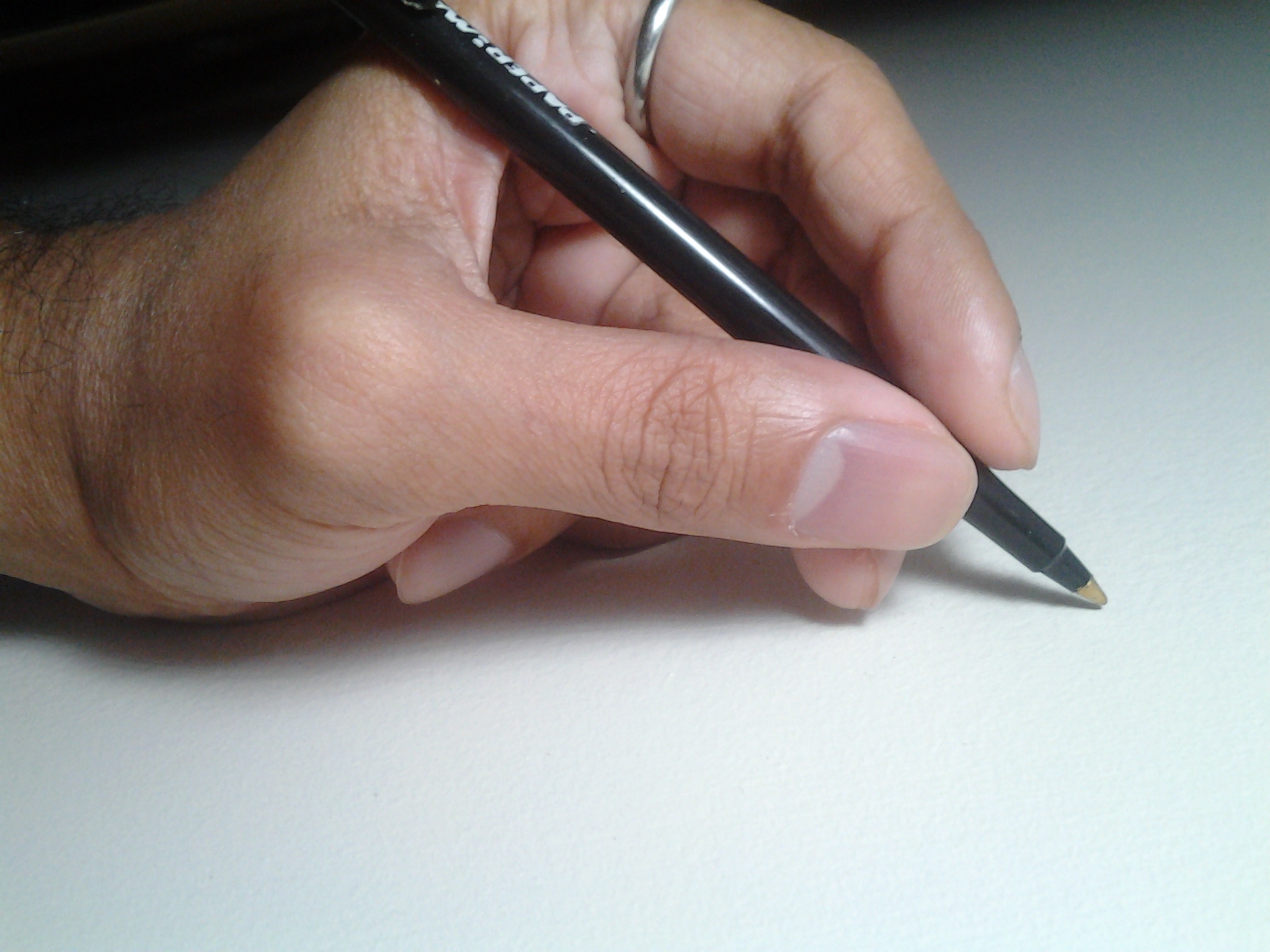
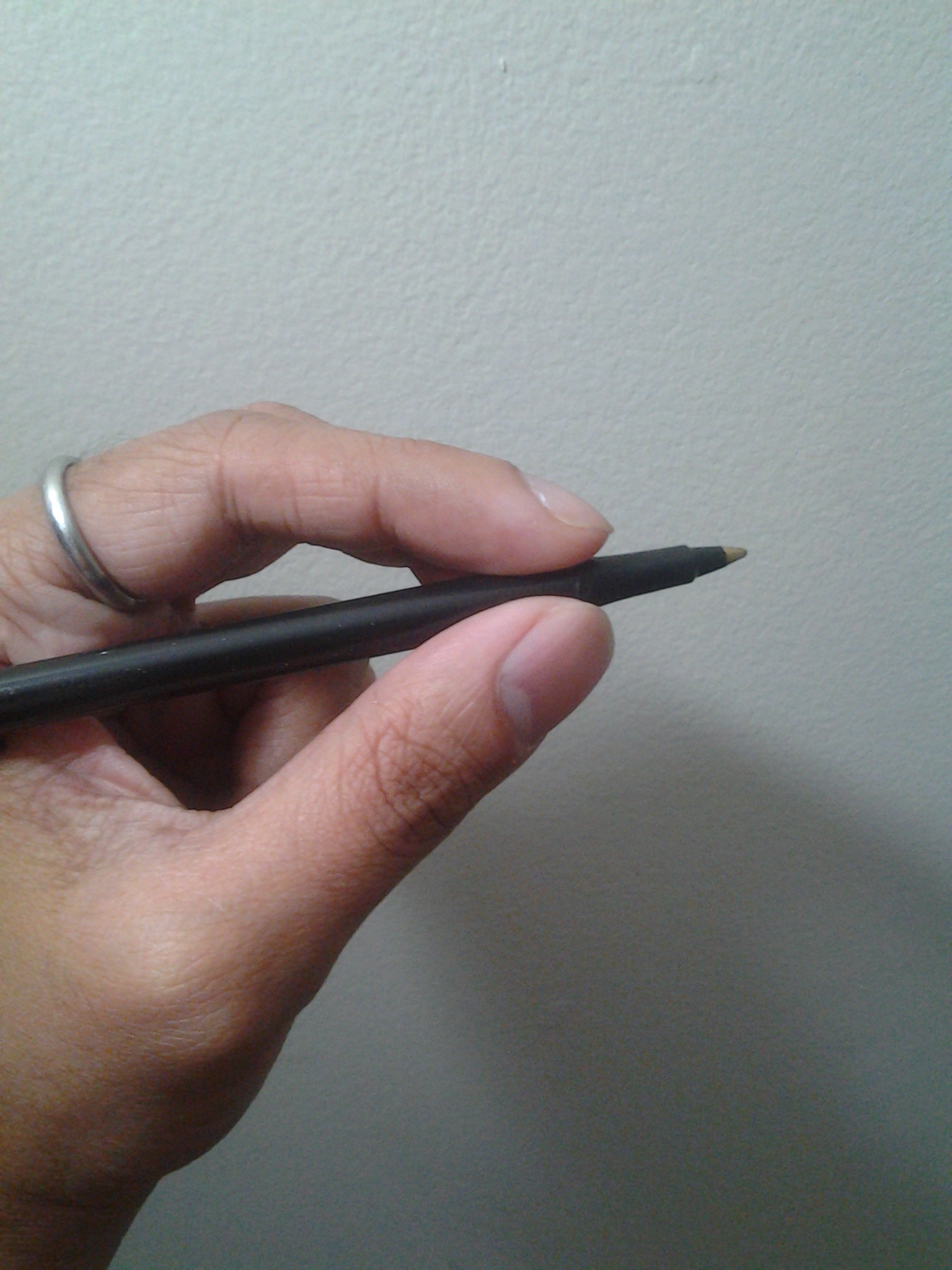
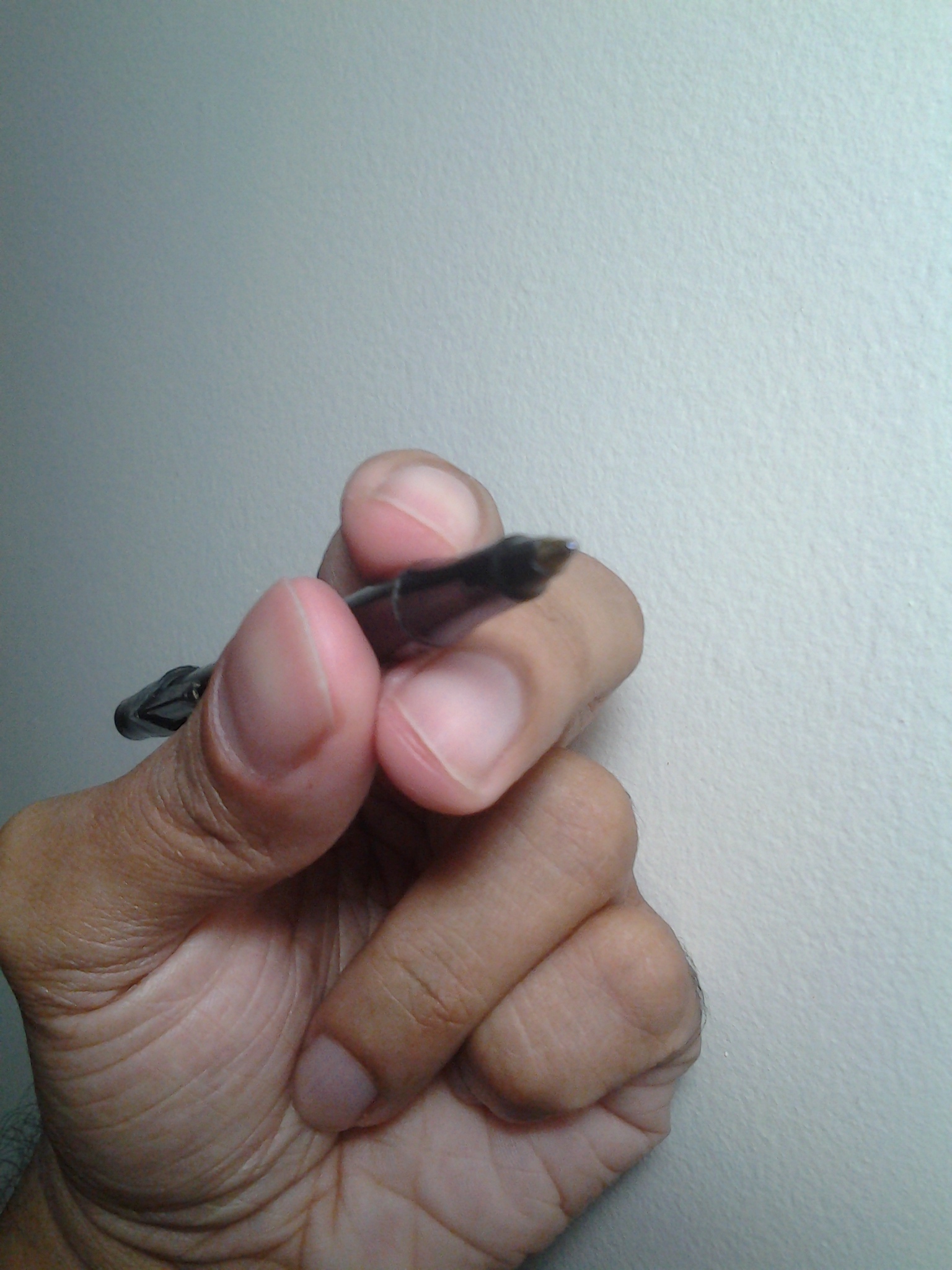
Your thumb, index finger and middle finger create a sort of open triangle. The index finger and thumb don’t need to be closed, however the middle finger does need to cross over toward the thumb a little bit to form a “shelf”. The pencil really rests on the tip of the middle finger while the index finger and thumb prevent the pen from sliding about on this “shelf”.
Note how little effort is needed to hold the pen.
Note how little effort is now needed to hold the pen.
The "open triangle". Note the index and middle finger really does the writing, while the middle finger just sort of rides along.
The “open triangle”. Note the index finger and thumb really do the writing, while the middle finger just sort of rides along below holding up the “shelf”.
While the middle finger creates the "shelf" to hold the pen, the ring finger, little finger and the base of the thumb create the "pad" the hand rests on.
While the middle finger creates the “shelf” to hold the pen, the ring finger, little finger and the base of the thumb create the “pad” the hand rests on.
It’s your thumb and index finger that actually do the writing by moving in unison while the middle finger sort of tags along under both of them holding the pen up towards them.
When the index finger has this slight curve, you’re not putting too much pressure on the pen. Remember you’ve got fingers; not a pair of vise-grips so don’t treat them as such.
Your ring finger, little finger and the lower part of your thumb create the pad that lets you glide about the paper.

What’s the big deal?

This arrangement gives the greatest amount of dexterity when it comes to writing while requiring the least amount of effort. Also, I’ve had juvenile arthritis since the age of 12 so you can bet I’ll look for the least awkward and least painful way to write as long as possible if I can help it.
The longer you write, the more tired and strained your fingers will feel if you don’t hold your pen correctly. If you’ve felt tired or your fingers hurt after writing what seems like a short period of time, chances are you’re holding your pen awkwardly.

No, but really, what’s the big deal?

Everyone types these days. It’s come to a point where handwriting, when it comes to communication, is at about the same level as walking when it comes to transport. People don’t do it because they need to; they do it unless other forms are not available, not applicable or inappropriate.
This is a shame, really.
Humans are not unique when it comes to complex speech. Plenty of other creatures in this world have far more complex speech patterns in a greater range of frequencies that humans can’t even perceive let alone articulate. We aren’t unique in our concept of culture either. Dolphins are routinely known to hunt with different characteristics depending on the area of their range, even though they may be the same species. Likewise, wolves also exhibit uniqueness from pack to pack. Same species, different behavior depending on community and location. We call that “culture”.
The only real difference between us and most other animals is a writing system that lets us pass knowledge from generation to generation. Whereas other creatures are pretty much reduced to chemical secretions when they want to leave a message. In fact, it’s our writing that has allowed us to advance this far and, of course, opposable thumbs helped. Our civilization really owes its existence to writing, not just speech.
Now that you have these wonderful tools at your disposal, wouldn’t you want to know how to use them correctly?

A little background

I’m left-handed, though I usually write with my right hand (unless I’m holding a cup of coffee with my right, or in this case, my phone to take the above pictures).
It became really obvious that I’m left-handed when a few years ago I suffered almost complete numbness in my left hand due to the side-effects of a heart medication I was taking at the time. A lot of things suddenly became far more awkward than I expected because… oh right, I used to use my left hand for that.
I also recently started learning the guitar and I fear my lack of progress with the right-handed instrument may also be due to me being left-handed in addition to the shortage of free time.
When I was in kindergarten, I had an awesome teacher; probably the best I’ve ever had. In many ways she’s the reason I am who I am today and was really responsible for cultivating my curiosity and a tenacity when it comes to satiating it. That aspect has stayed with me to this day, but unfortunately, she had a not so awesome assistant.
Despite me being left-handed, the assistant, in a not so delicate way, made sure I used the right hand when writing, although my repeated switch to the left should have been a hint. The mere concept of a left-handed writer seemed to have been alien to her and, since I was 2-3 at the time, I couldn’t really mount an effective protest. As a result, I now write mostly with my right hand. This is far more common than a lot of people realise.
But she did at least show me how to hold my pencil correctly so I guess I’m grateful for that.